
Wiki · Community post
How to Take High‑Speed Trains in China?
 David MitchellShared Aug 16, 2026
If you’re planning independent travel across China, high-speed trains (HSR) are easily the most convenient, comfortable way to hop between cities. However, many first-time foreign travelers feel confused about the whole process — especially since we use passports instead of Chinese ID cards.
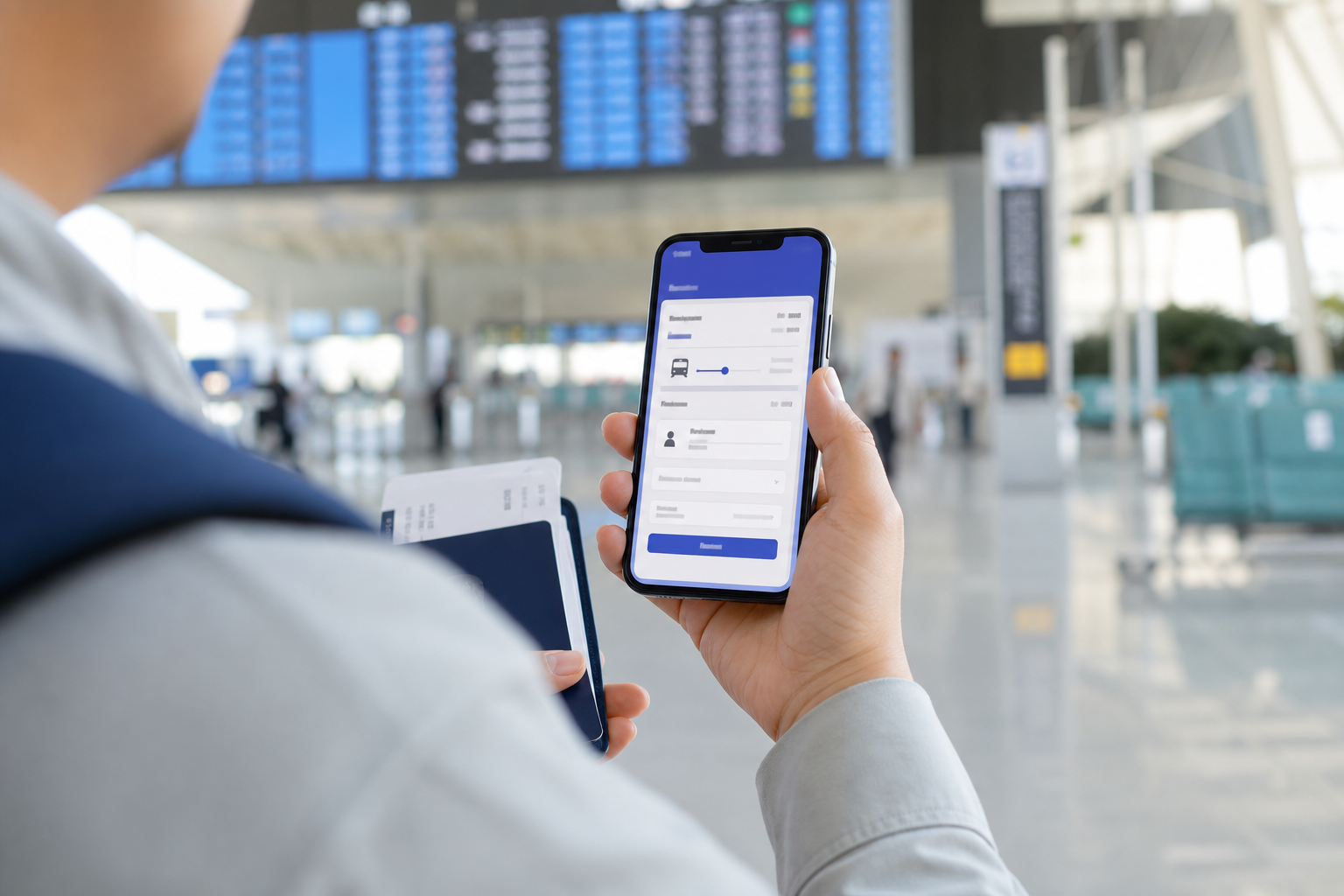
1. Booking Tickets With Your Passport: Mobile Booking & In-Station Purchase
All high-speed rail travel in China requires real-name verification. For overseas tourists, your passport acts as your official ID. No physical paper ticket is mandatory; your booking confirmation plus your original passport are all you need to board.
There are two popular ways to book online:
- Official App: 12306 (Recommended)
- Trip.com
⚠️ Important note: Tickets open for booking 15 days ahead. Popular routes and holiday periods sell out fast, so book as early as you can.
If you fail to book in advance online, you can buy tickets at the train station. Head to the staffed ticket windows and present your passport. Write down your departure location, destination and travel time on your phone or translation app to show staff.
Do not waste time queuing at self-service ticket machines — almost all only accept Chinese ID cards and cannot process passport bookings.
2. Arriving at the Station: Security Check & Finding Your Gate
Try to arrive at least 30–40 minutes early. For huge hubs like Shanghai Hongqiao or Beijing South Station, arrive 45 minutes early to avoid rushing through security and long walking distances.
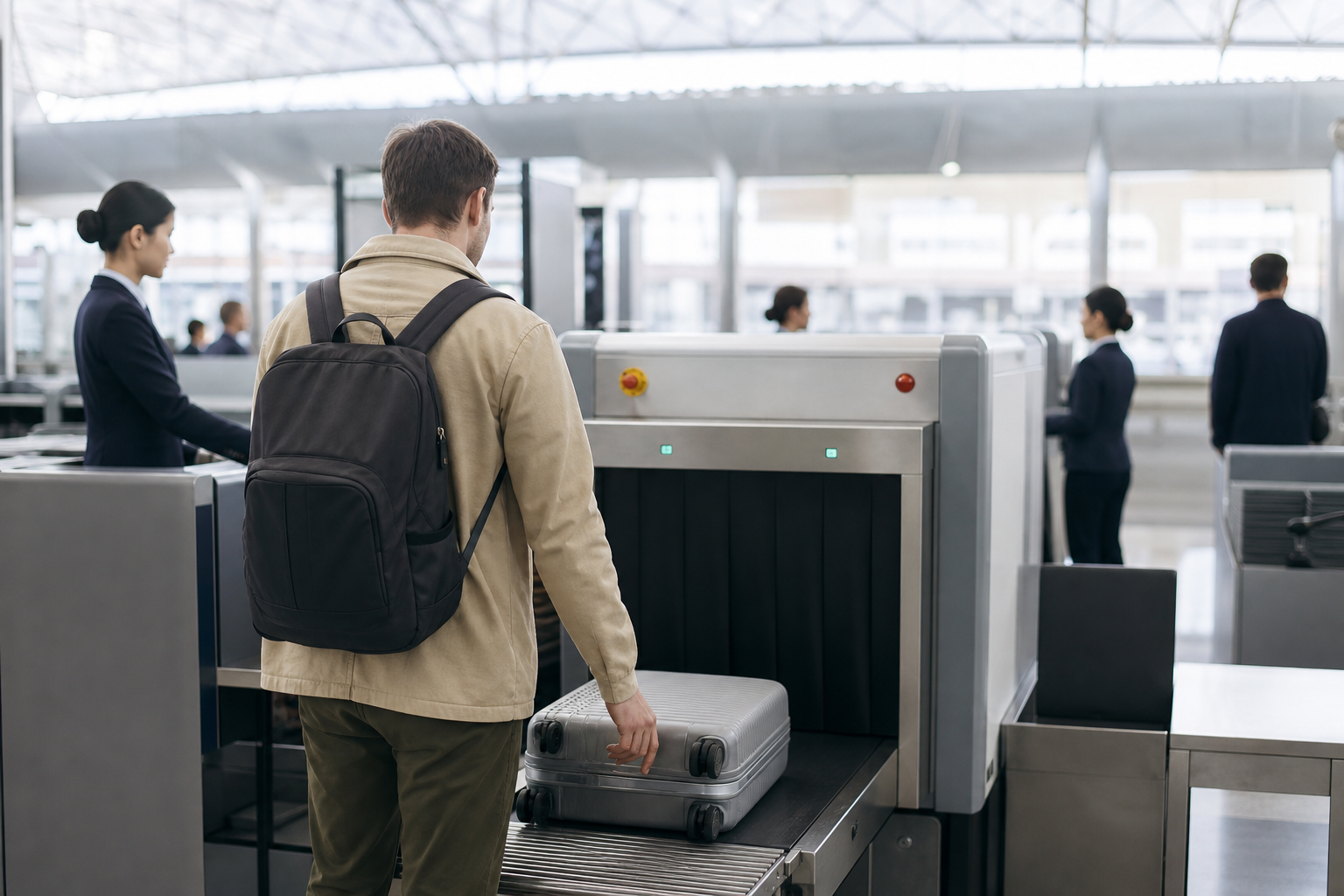
First step: security screening. Place all bags and suitcases on the X-ray belt. Phones, laptops and power banks need to be taken out separately. Power banks must stay in your carry-on luggage — you cannot check them in. Knives, lighters and flammable goods are banned entirely. You may go through a quick metal detector scan; simply cooperate with staff. Bottled drinking water is allowed inside the station.
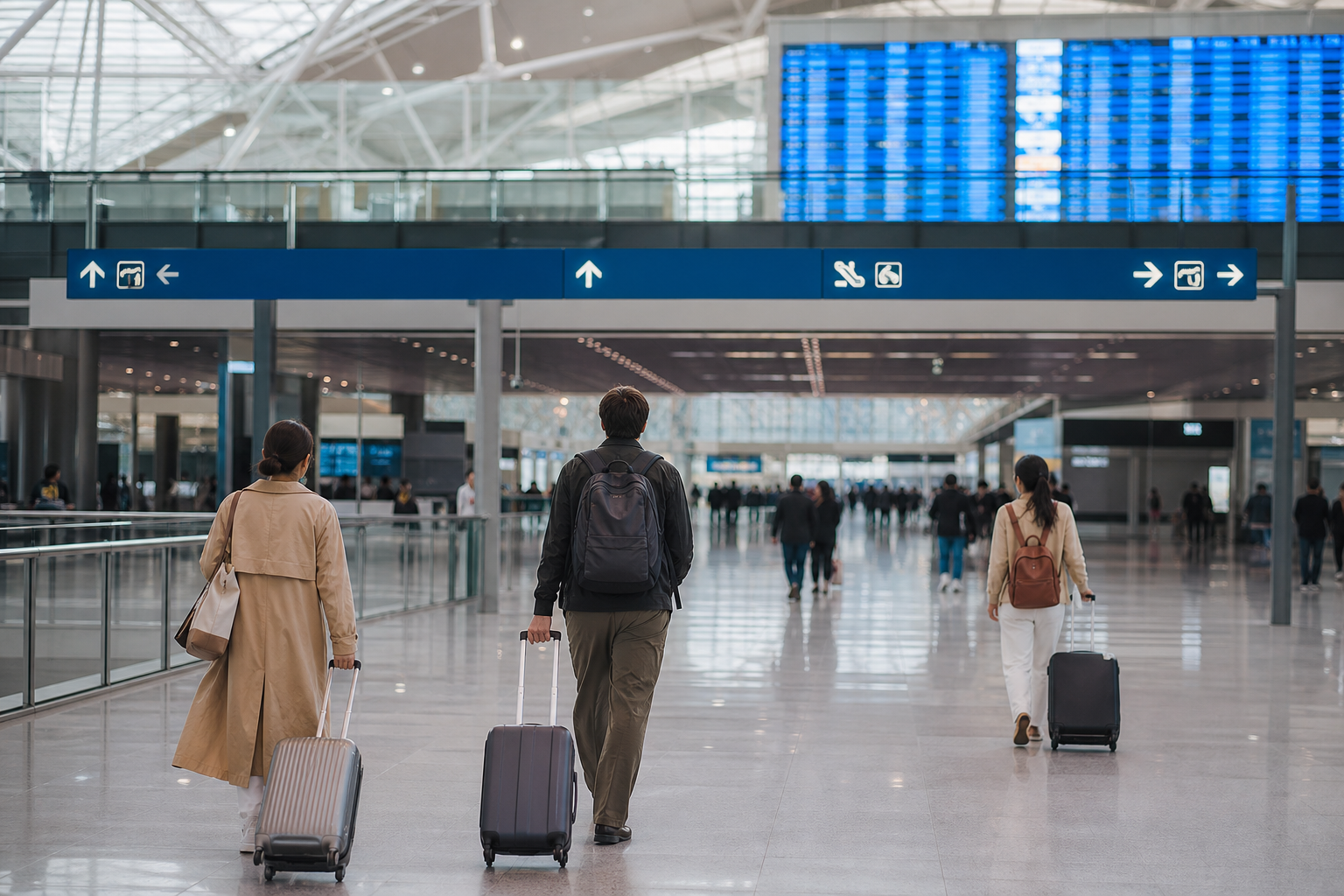
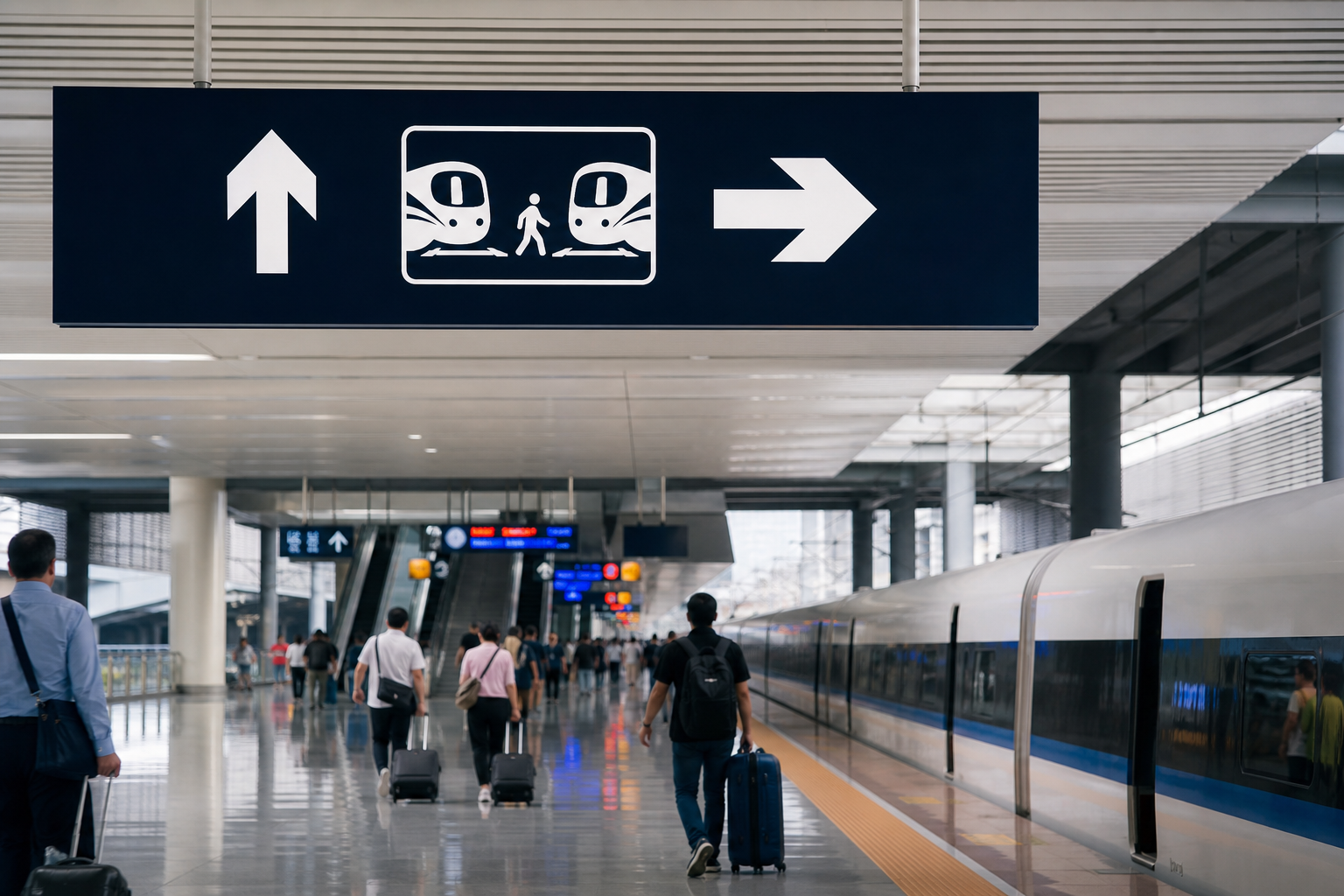
After security, you enter the main waiting hall. Large electronic departure boards display all upcoming trains. Find your train number and note your boarding gate (marked A8, B12 and similar). Follow blue directional signs on walls and floors to walk toward your waiting area.
Seats above the waiting zone also display train information for double-checking. Boarding usually starts around 20 minutes before departure, and gates close 3–5 minutes before the train leaves. Never cut it too close.
3. Going Through Gate Inspection & Accessing the Platform
Most automatic turnstiles only work for Chinese national ID cards. If you hold a passport, always use the staffed manual boarding channel. Hand over your passport for staff to verify alongside your booking details. Don’t repeatedly try scanning your passport at automatic gates; they won’t recognize it.
Once you pass inspection, walk down stairs or escalators to the train platform. Check the overhead electronic signs again to confirm your train and final destination so you don’t board the wrong service.
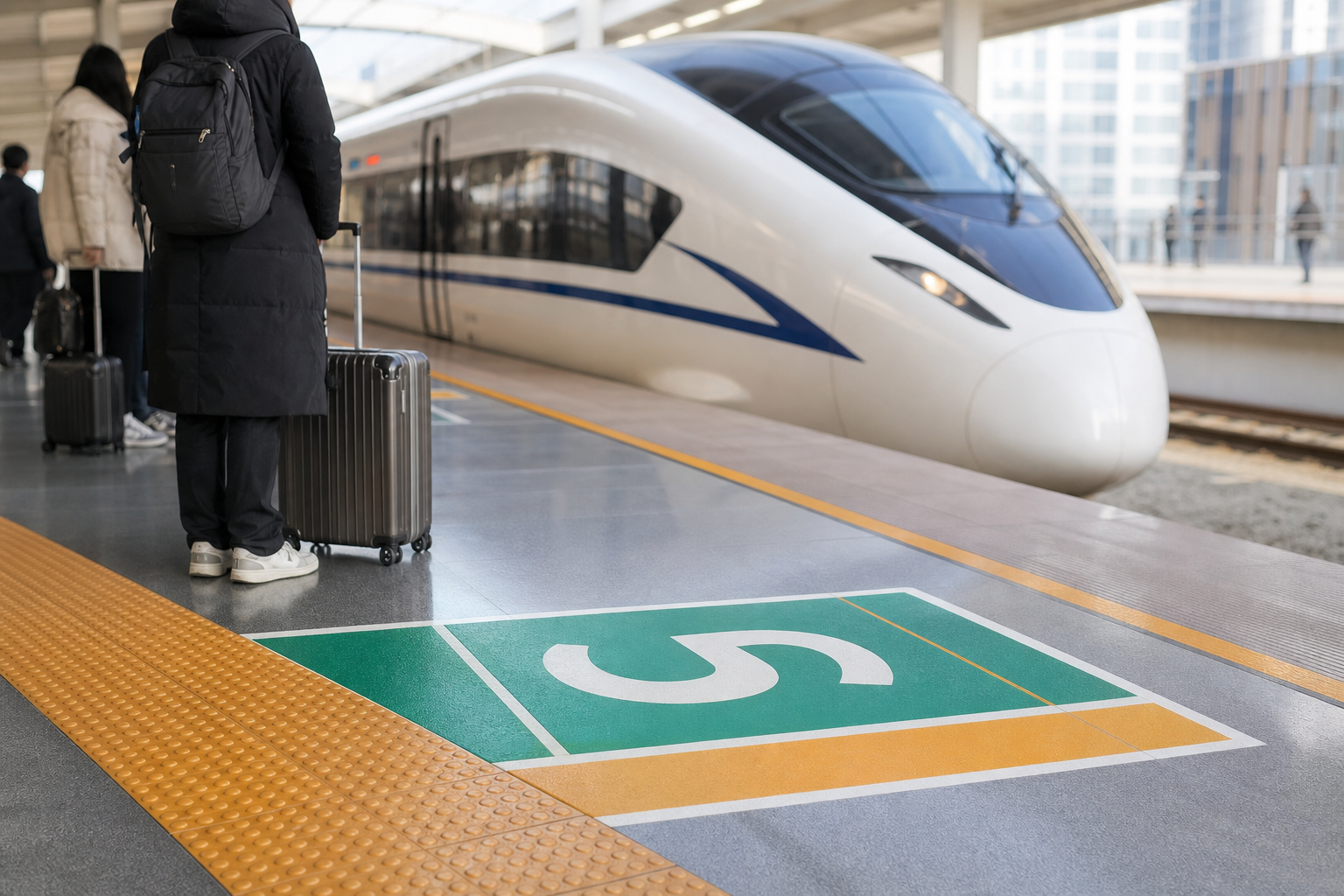
Bright colored numbers are painted directly onto the platform ground. Each number marks where each train carriage will stop (e.g. number 05 = Carriage 5). Line up near the matching number ahead of arrival. The train doors will stop precisely at these markings.
4. Finding Your Carriage & Seat, Luggage Storage + Safety Tips
When the train arrives and doors open, check the carriage number printed outside before stepping on board. Seat numbers are clearly labeled along the inside walls. For example: Carriage 05, Seat 12A means Carriage 5, Row 12, Seat A. On second-class coaches, seats A and F are window seats, while C and D sit next to the aisle.
Two options for luggage storage:
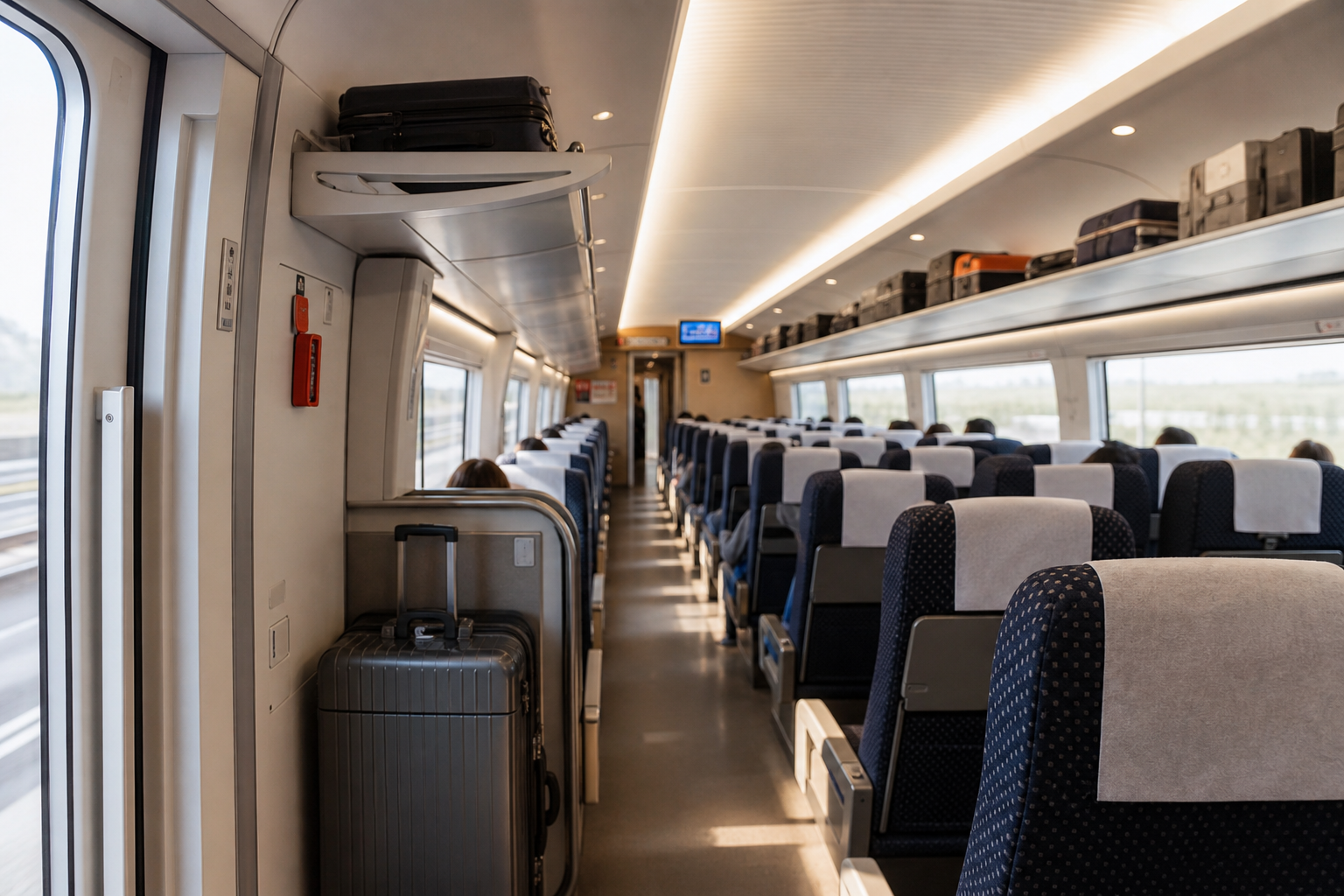
Small backpacks and suitcases under 20 inches can be placed securely on the overhead racks. Do not let items hang over the edge to prevent them sliding when the train moves.
Larger luggage (24 inches and above) should not be forced onto overhead shelves. Use the dedicated large luggage storage areas near the doors at each end of every carriage. Keep walkways clear at all times.
A lot of overseas travelers worry about luggage safety. It’s worth mentioning: high-speed trains in China are extremely safe. Theft from luggage is very rare. Even so, keep valuables like wallets, cameras and laptops within arm’s reach at your seat.
One critical rule: smoking is completely banned everywhere on the train, including restrooms and connection areas. Heavy fines apply to anyone breaking this rule.
5. Order Food Delivery Directly to Your Seat Onboard
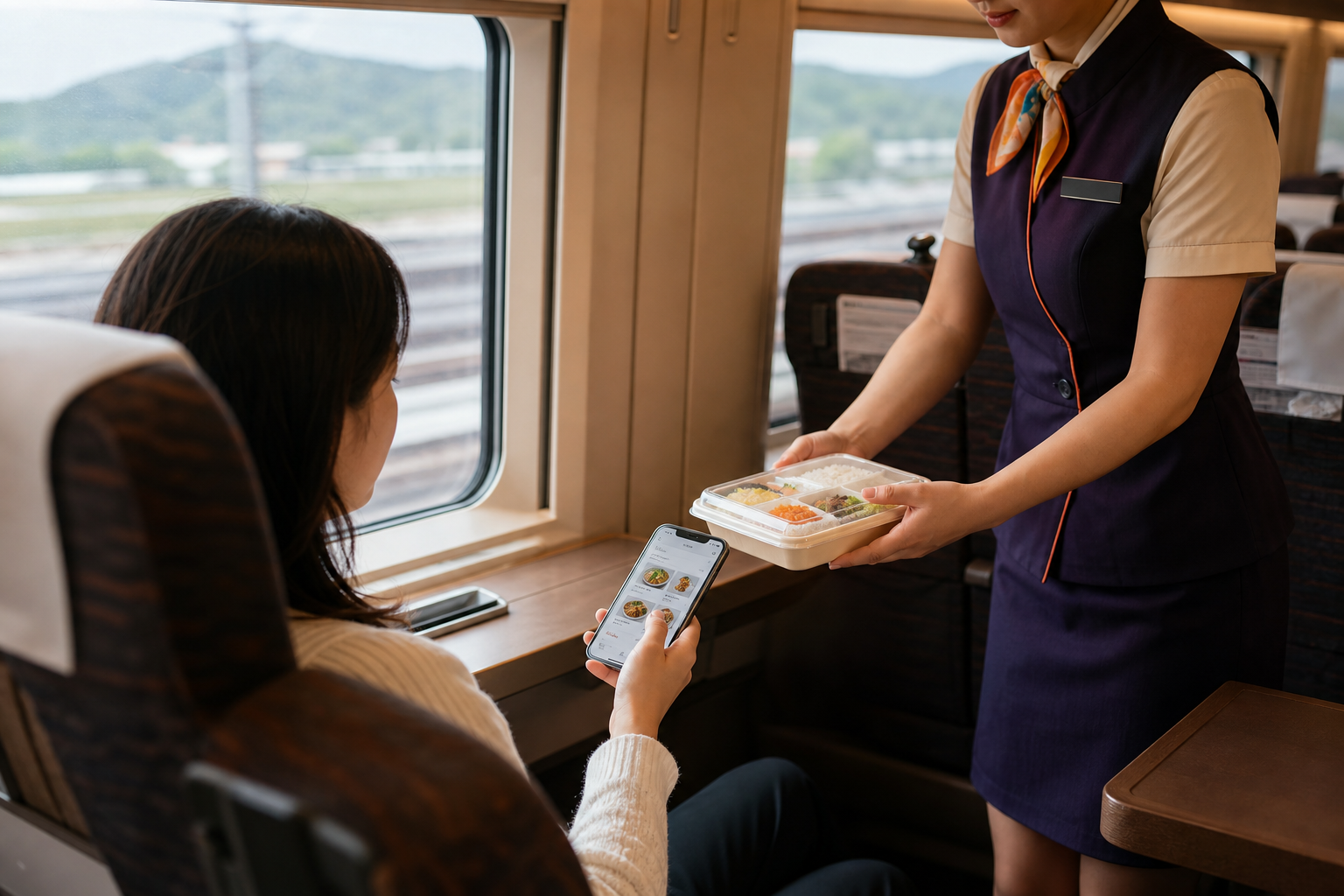
A fantastic feature many tourists don’t know about: you can order food from restaurants located at stations along your route, and crew members will bring meals straight to your seat. You are not limited to basic train snacks and onboard box meals.
Open the 12306 app and find the “Food & Local Products” section. Input your train number and travel date. The app will show all stations where food delivery service is available along your journey. Pick a station and browse restaurants, ranging from fast food chains to local specialty eateries.
⚠️ Important rule: You must complete your order at least 60 minutes before the train arrives at that station. Orders placed too late cannot be accepted. When the train pulls in, station staff load the food onto the train, and attendants will deliver each order to passengers. No need to get off the train at all.
Smaller stations often don’t support this service. For long-distance trips, select major capital city stations for the highest success rate.
6. Don’t Oversleep! Chinese Trains Run On Time – Set an Alarm 15 Minutes Early
China’s high-speed rail network has one of the best punctuality rates worldwide. Most trains follow timetables strictly and rarely delay. On the flip side, trains only stop for a very short time at intermediate stations — often just 2 to 5 minutes.
If you plan to rest during your ride, it is easy to accidentally miss your stop. I strongly suggest setting a phone alarm 15 minutes before your train arrives at your destination.
When you hear announcements for the upcoming station, gather all your luggage and move toward the carriage doors in advance. Waiting until the train fully stops leaves you almost no time to get ready.
7. Arrival: Exiting the Station & Transfer Between Trains
Direct journey – normal exit process
Once you reach your destination station, collect all belongings and get off the train. Follow green “Exit” signs on the platform. When exiting the station, use the manual inspection channel and present your passport again if requested. Before leaving, double-check seats and luggage racks to make sure you haven’t left your passport or electronics behind. You can then take taxis or metro services from the station.
Transferring to another train (connecting journeys)
If you have two consecutive train tickets for the same station, you do NOT need to exit the station or go through security again. After getting off your first train, look for signs marked “Transfer / Convenient Transfer”. Follow the dedicated passage directly back into the waiting hall. Show your passport and second train ticket to staff to enter the waiting area.
Suggested transfer time:
- Smaller stations: minimum 20 minutes
- Major hubs such as Beijing South, Guangzhou South, Shanghai Hongqiao: allow at least 30 minutes
If transferring between two separate stations within the same city, you must exit the first station entirely. Take metro or taxi services to reach the second station, and plan for a minimum 90-minute buffer to avoid missing your connection.
Final Thoughts
High-speed trains are the best way for independent foreign travelers to explore different regions of China. Once you get familiar with the process, moving between cities becomes seamless.
Quick recap of key takeaways: Always keep your passport safe, book tickets ahead of time, arrive early for boarding, watch your gate number, and set an alarm for your destination stop. Master these steps, and you can travel freely and comfortably all across China.
If anyone has extra questions about HSR travel as a foreign visitor, drop them in the comments!