Trip report · Community post
Sourcing Fabric in China: How We Visited Keqiao Textile City & Hangzhou Silk for Under $2,000
A first-hand sourcing trip through Hangzhou silk and Keqiao Textile City, including practical train transfers, fabric-market lessons and a personal cost breakdown under $2,000 excluding international flights.
 紧风Shared Sep 3, 2026
In brief: On a short sourcing trip from Shanghai through Hangzhou and Keqiao, we found a practical way to compare silk, browse fabric at scale and build supplier relationships without an enormous travel budget. Our total came to under $2,000 excluding international flights, including local transport, hotels, food, sampling and initial fabric purchases.
Trip report · Costs and timings are our own experience rather than a quote or a guarantee. Check live rail, hotel and supplier details before you travel.
Why we made the trip
My independent clothing studio was only two weeks old, so almost everything still felt provisional. In fashion, fabric is not a finishing detail; it determines the weight, hand feel and personality of the piece. Our studio designer, Anna, flew to China to see materials in person instead of making early decisions from a screen.
We planned the route around two very different textile experiences: Hangzhou for silk and Keqiao for the immense wholesale fabric ecosystem known as China Light Textile City. Keqiao is widely regarded as one of the world's biggest textile-trading hubs, and that scale changes the way you can search, compare and negotiate.
Starting in Hangzhou: silk, a calm base and West Lake
We landed in Shanghai and continued to Hangzhou, a manageable first stop before the intensity of Keqiao. It gave us time to visit a silk factory, understand more about fiber and weave choices, and meet people connected to the industry.
For a new visitor, Hangzhou also made the trip feel less like a purely commercial errand. We stayed in a modest central hotel, used ride-hailing for short hops, and had a quiet walk around West Lake after meetings. If you are new to China, the practical setup matters: save hotel addresses in Chinese, keep a backup payment method, and download navigation before arrival. Our Amap navigation and taxi guide and Travel Pocket Kit can help with that preparation.

The practical transfer: Hangzhou to Keqiao
From Hangzhou, we used the high-speed rail network toward Shaoxing and continued by taxi to Keqiao. The rail leg itself was short; the door-to-door plan still needed a little slack for station entry, luggage, arrival orientation and the final ride to the market. That is the difference between a timetable that looks effortless and a day that actually feels manageable.
We bought the appropriate rail tickets and allowed time to find our platform rather than trying to cut it too fine. If you have not used China's rail system before, read the high-speed rail guide first, especially for station timing, passport-based tickets and platform procedures.
Inside China Light Textile City
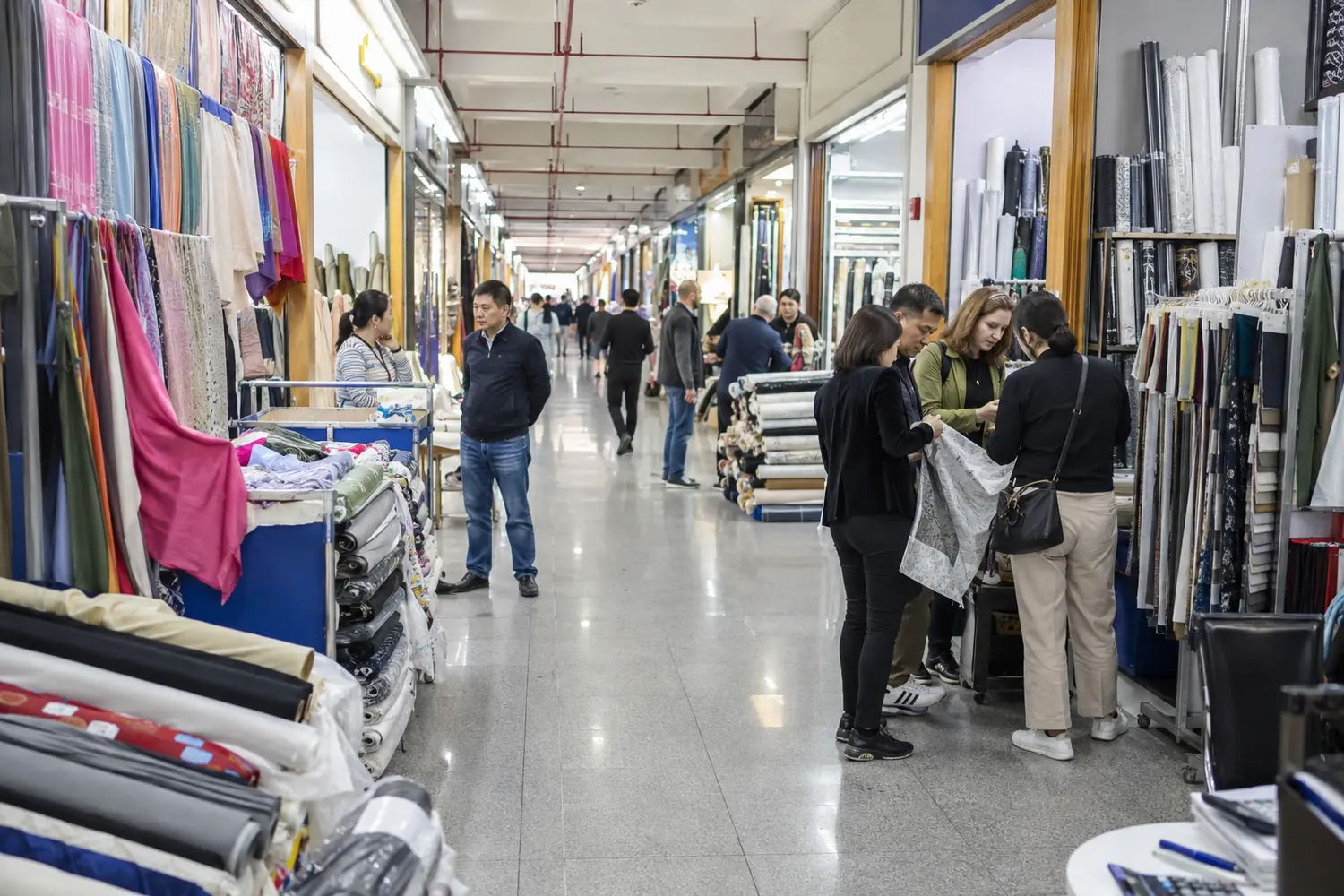
Keqiao was overwhelming in the useful way. The market is not one photogenic hall with a single curated selection; it is an enormous working network of small fabric businesses. We moved from shop to shop, touching rolls, comparing colours under different light, collecting swatches and asking what could be sampled or reordered.
Translation tools helped with the basics, but patience and clear reference images mattered even more. Several vendors showed us alternatives when we explained the silhouette, price point and intended garment. We did not treat any first conversation as a final supplier decision. Instead, we recorded fabric composition, minimum quantities, sample prices, lead times and contact details before narrowing the options later.
Our most useful rule was simple: photograph the sample book and write down the shop location immediately. After a few hours, different aisles and similar-looking rolls can blend together.
What the budget covered
- Local rail and ride-hailing between Shanghai, Hangzhou, Shaoxing and Keqiao
- Simple, well-reviewed hotels and everyday meals
- Sampling, small initial fabric purchases and supplier visits
- Time to compare materials in person rather than committing from a catalogue
Our own total stayed below $2,000, not including the international flight. That is not a universal price: material choices, sample quantities, season, hotel standard and the number of factory visits can move it quickly. But for a small studio, it showed that a first scouting trip can be more achievable than it sounds.
Keqiao after the market
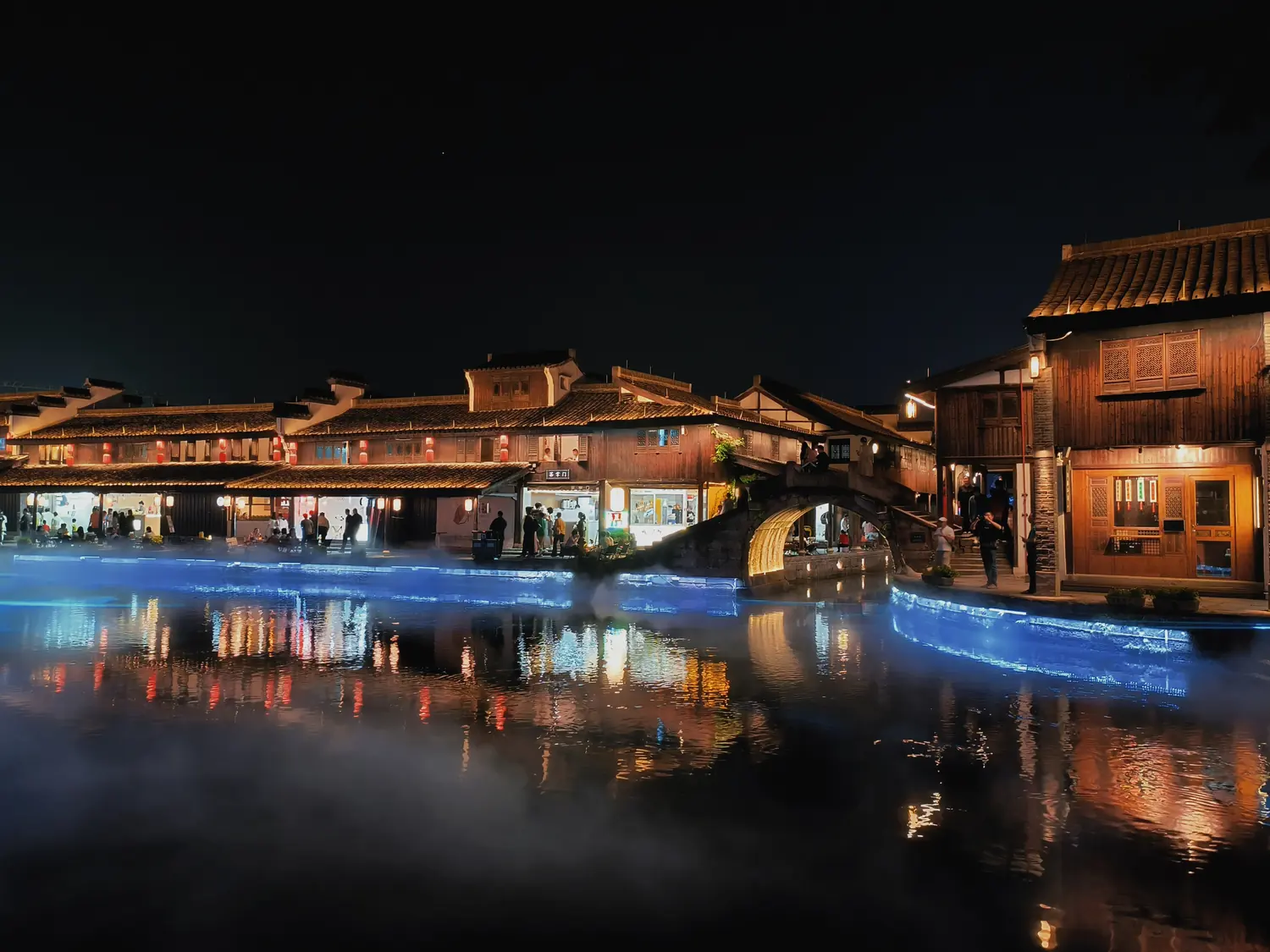
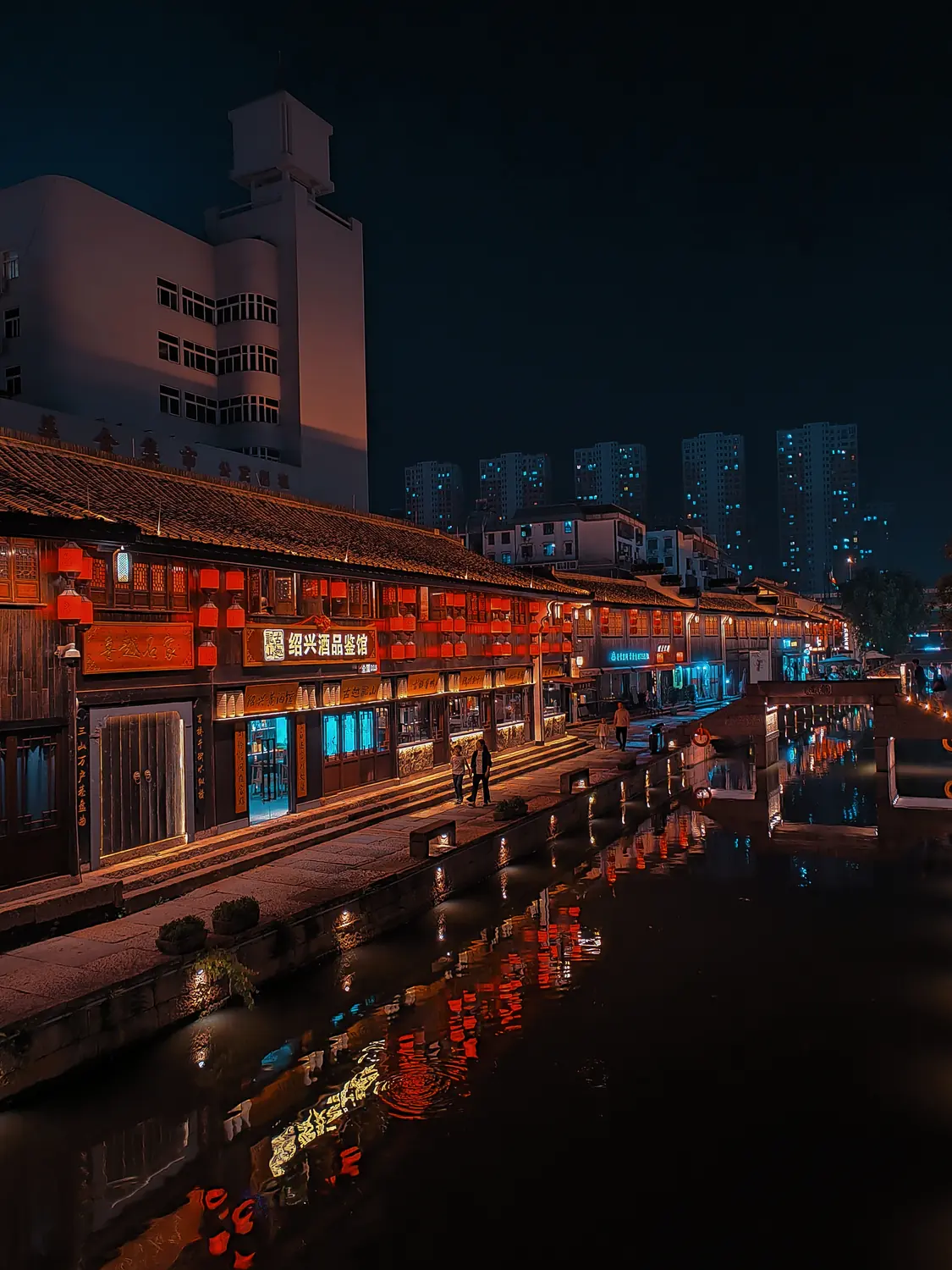
After a long day of samples and conversations, the old-town waterfront gave us a completely different pace. It was one of the moments that made the trip feel like travel as well as work: lantern light, old rooflines, water reflections and a chance to step away from cost sheets.
What we would do differently next time
- Bring a tighter brief. A one-page list of desired compositions, weight, colours, target prices and garment uses would make the first market day more efficient.
- Leave a buffer around every transfer. China's fast rail makes regional travel practical, but stations, taxis and check-in still use real time.
- Order samples before committing. A good-looking roll is not the same as a finished garment after cutting, sewing and washing.
- Make room for the city. Hangzhou and Keqiao are not just supply-chain stops; slowing down made the meetings and decisions better.
For a young studio, the lasting value was not only the fabrics we brought home. It was seeing the supply chain in person, learning how to ask better questions and leaving with a more grounded sense of what our first collection could become.