
Wiki · Community post
China Plug Type Explained: Do You Really Need a Travel Adapter?
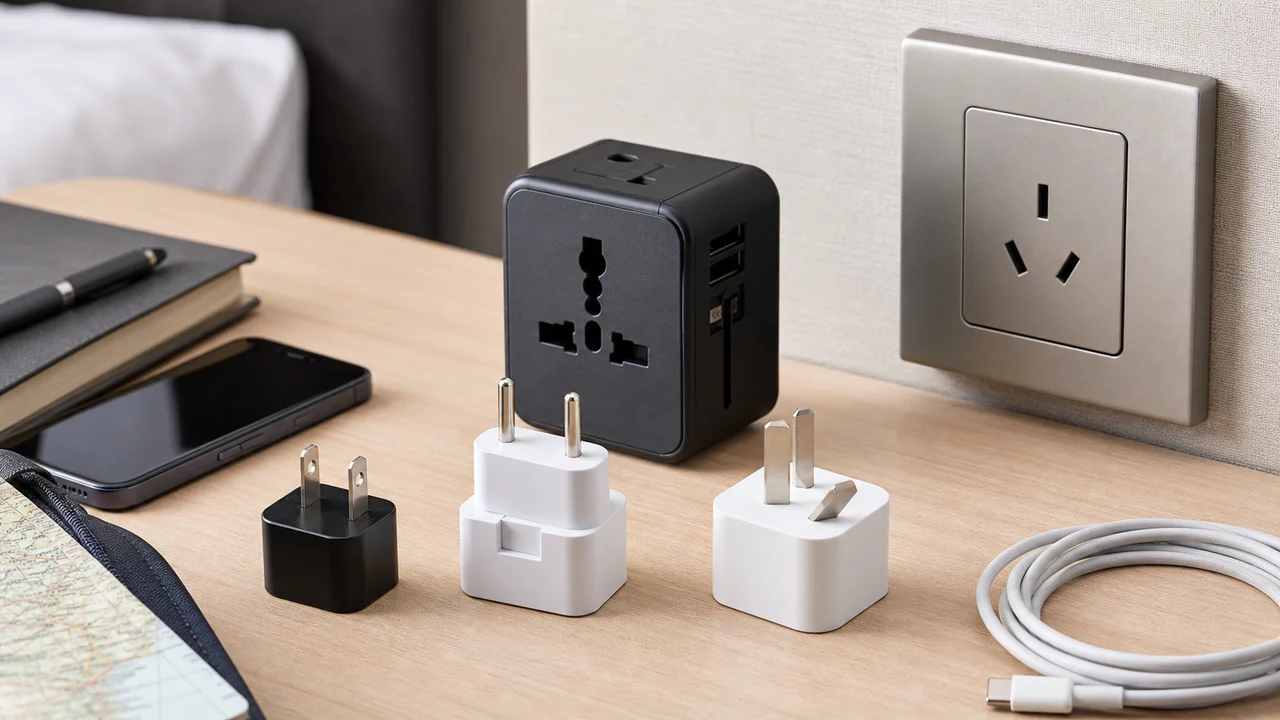
If you are gearing up for a trip to mainland China, sorting out power and charging gear is one of those small details that can ruin an evening if you get it wrong. Lots of first-time visitors go back and forth: should I throw a travel adapter in my bag, or can I get by without one entirely? This guide brings together common visitor experience and the basic socket specifications.
Voltage: usually not the issue
Mainland China runs on 220V, 50 Hz power. Most modern phone chargers, tablets and laptop bricks are built for 100–240V input. That means you almost never need a heavy voltage converter. You usually only need to worry about the physical shape of your plug fitting into wall sockets, not transforming electricity.
Before packing, check the label on each device. If it says only 110V, do not plug it into Chinese power even with an adapter.
The plug types you will encounter
Three main plug types show up across China’s wall outlets: Type A, Type C and Type I.
- Type A: Two flat parallel pins with no ground pin. It looks like standard US and Japanese two-prong plugs. Many multi-format wall sockets accept it directly.
- Type C: Two round prongs, the standard Europlug used across continental Europe. Many newer hotel wall plates have slots for these, but fit can be hit-or-miss on older hardware.
- Type I: Three flat pins arranged in a V shape. This is the common grounded Chinese standard in newer hotels, offices and public buildings. UK, European grounded and North American three-prong plugs will not fit it without a proper adapter.
Many modern tourist hotels install combination wall plates that accept more than one plug type. But this is not universal. Budget guesthouses, older city hotels and remote-town accommodation may only carry basic Type A or Type I sockets. Do not bank on every wall working for your plugs.
What about built-in USB and USB-C ports?
Many mid-range and international-chain hotels now have direct USB-A or USB-C charging ports in wall sockets, bedside lamps or desk panels. If you bring only your cable, you may be able to charge phones, earbuds or power banks without using your original power brick.
There are important caveats. This is more common in bigger cities such as Shanghai, Beijing, Hangzhou and Chengdu. Smaller towns, older budget hotels and rural guesthouses may have no built-in USB ports at all. These ports are for low-power gadgets, not full-size laptops or other AC devices.
Should you pack an adapter?
Yes. Bring one, but pick the right kind. Skip cheap single-format adapters that only handle European plugs. A compact universal adapter that supports China’s Type I socket and includes at least one USB-C and one USB-A port is the most flexible option.
It gives you two options: plug the adapter into the wall for a laptop or other AC device, then charge phones directly through the adapter’s USB ports. That matters because some Chinese hotel rooms have only two or three usable wall outlets.
Quick real-world checks
- Do not confuse mainland China sockets with Hong Kong. Hong Kong uses British Type G sockets, so you need different gear there.
- Even if a two-prong plug fits physically, a three-prong grounded device may still need a Type-I-compatible adapter.
- Front desks sometimes lend adapters, but stock is limited. Do not plan your trip around borrowing one.
- Built-in hotel USB ports can vary in charging speed. They are fine for overnight phone charging, but do not expect fast-charge performance.
You may get lucky and find a hotel room loaded with universal sockets and USB-C ports. But luck is not a travel strategy. A small universal adapter takes very little luggage space and prevents you from being stuck in an older property with no friendly charging options. Pair it with your own USB cables and you will be covered for most situations inside mainland China.